The Cats of Largo di Torre Argentina
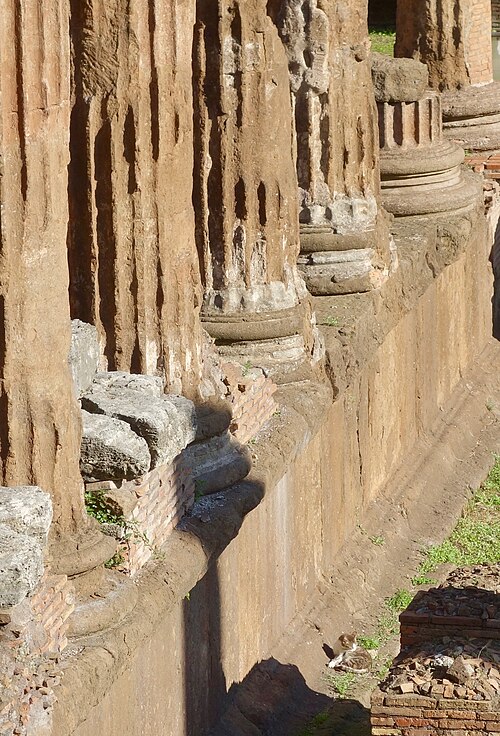
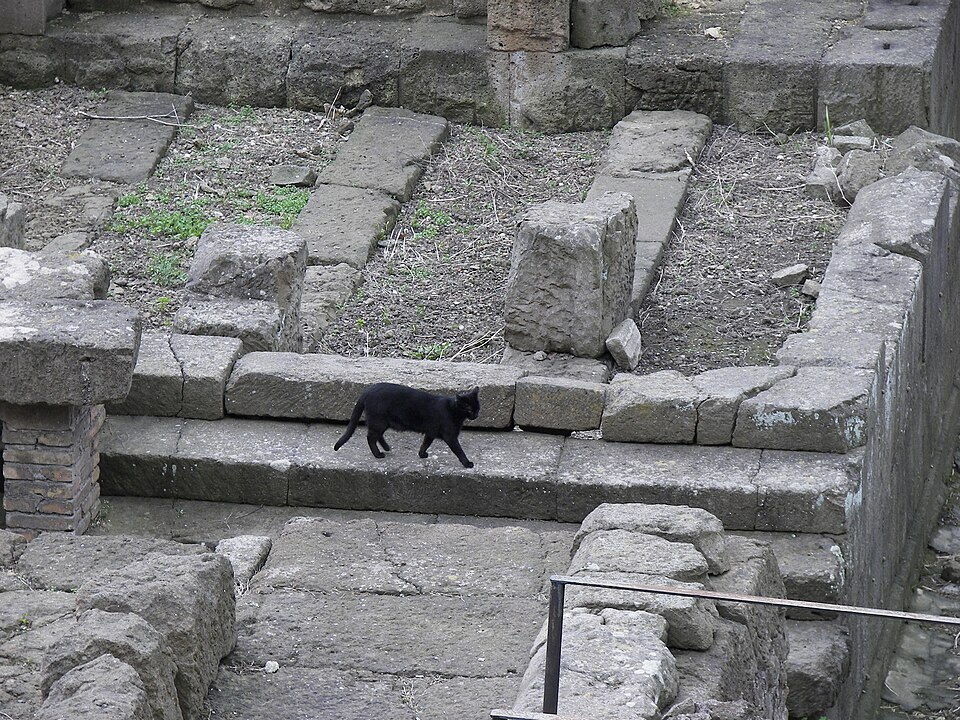
Among the ruins of the Republican temples in the Sacred Area lives one of the world's most famous cat colonies, now an inseparable part of the place's landscape and history.
The cat in ancient Rome
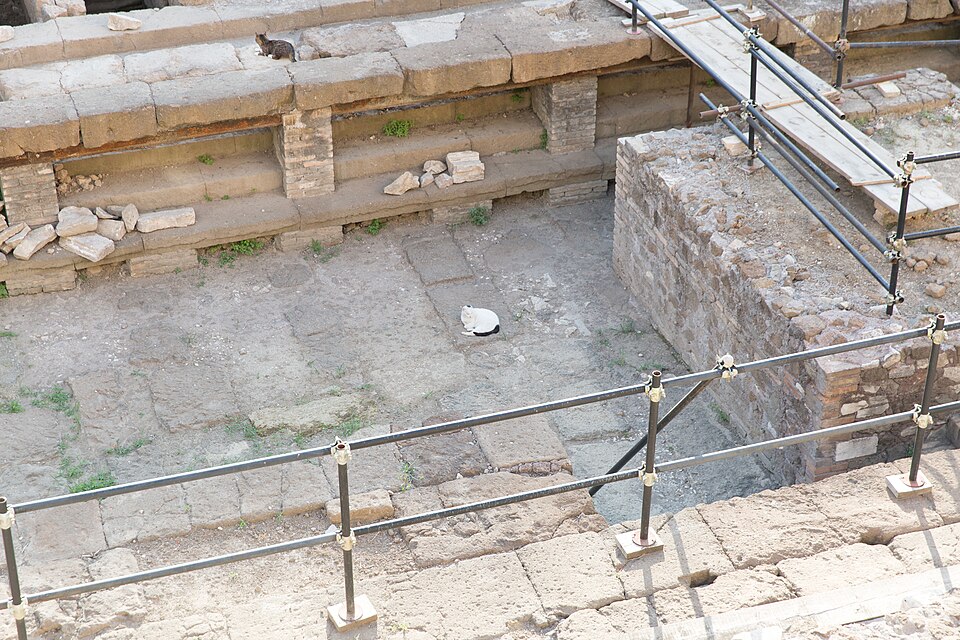
The domestic cat was not native to the Italian peninsula. It reached Rome along the trade routes from Egypt and became common around the 1st century AD . Before cats spread widely, the Romans used weasels and ferrets to keep rodents in check.
Pliny the Elder, in his Naturalis Historia, menziona il gatto come animale utile nella lotta ai roditori. Con il tempo, il felino si diffuse nelle case e nei luoghi pubblici di Roma, trovando nei ruderi e nelle aree archeologiche un habitat ideale.
The cat colony of the Sacred Area
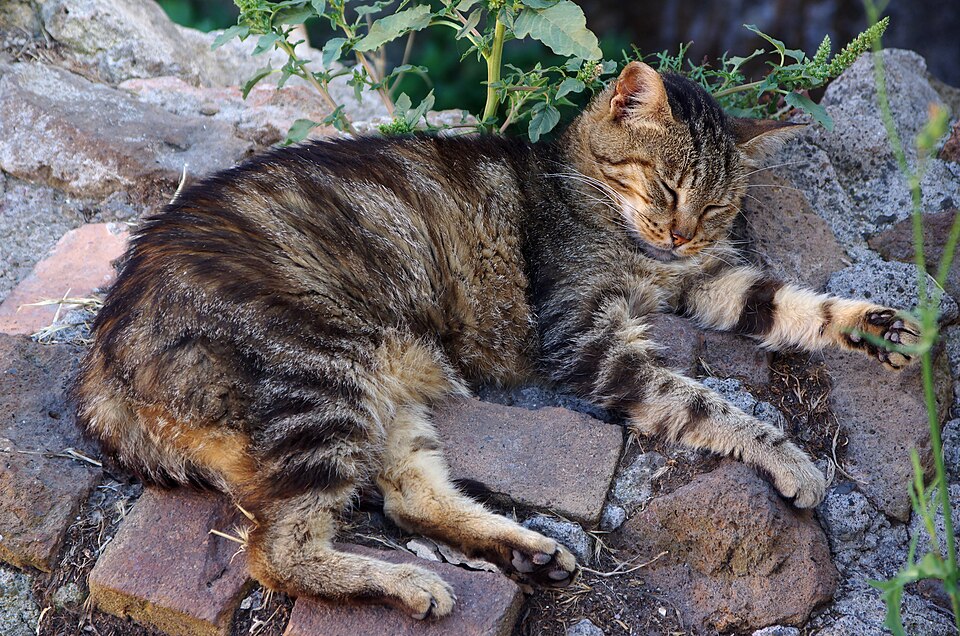
The settled presence of cats at Largo di Torre Argentina is documented from the 1926–1929 excavations. When the buildings above were demolished and the Republican-era temples brought back to light, the site – sunken below street level, sheltered and quiet – became a natural refuge for the area's stray cats.
Through the 20th century the colony grew, becoming a fixed and recognisable feature of the Roman cityscape.
Protection of cat colonies in Italy
The Law no. 281 of 14 August 1991 (("Framework law on companion animals and the prevention of straying")) e la norma fondamentale che in Italia protegge le colonie feline. La legge vieta la soppressione e il maltrattamento dei gatti randagi e introduce il principio della sterilizzazione e del ritorno nel territorio di origine (TNR).
The Lazio Regional Law no. 34/1997 extends these protections: a cat colony is defined as a group of two or more cats that live permanently in a place; registered colonies have the legal right to remain in their territory and cannot be relocated.
The Largo di Torre Argentina cat colony is duly registered and protected under these laws.
Timeline of the cats at Largo Argentina
1st century AD
The domestic cat spreads in Rome, imported from Egypt along Mediterranean trade routes
1926–1929
Excavations of the Sacred Area produce a sunken, sheltered site that becomes a natural refuge for stray cats
1991
Law 281/1991 protects cat colonies throughout Italy, banning the killing of stray cats
1997
Lazio Regional Law no. 34 formally recognises cat colonies and their right to remain in their territory
Today
Largo Argentina's cat colony is one of the most famous in the world, with over a hundred cats living among the Republican temple ruins
Historical facts
In the Naturalis Historia (1st century AD) the cat is described as a mouse-hunter.
Since 1991 Italian law has banned killing stray cats and protects feline colonies.
Cats reached the Italian peninsula from Egypt via the trade routes, around the 1st century AD.
The sunken Sacred Area, sheltered from traffic and full of nooks, is a perfect natural refuge.
The cat colony has been documented since the 1926–1929 excavations – an integral part of the site for nearly a century.
The cats can be watched for free from the railings surrounding the Sacred Area.
Photo Gallery