The Theatre of Pompey
Rome's first permanent theatre and the setting for Julius Caesar's assassination
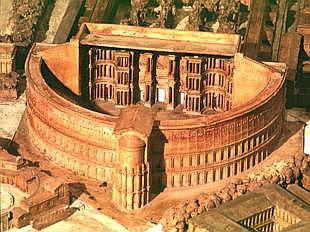
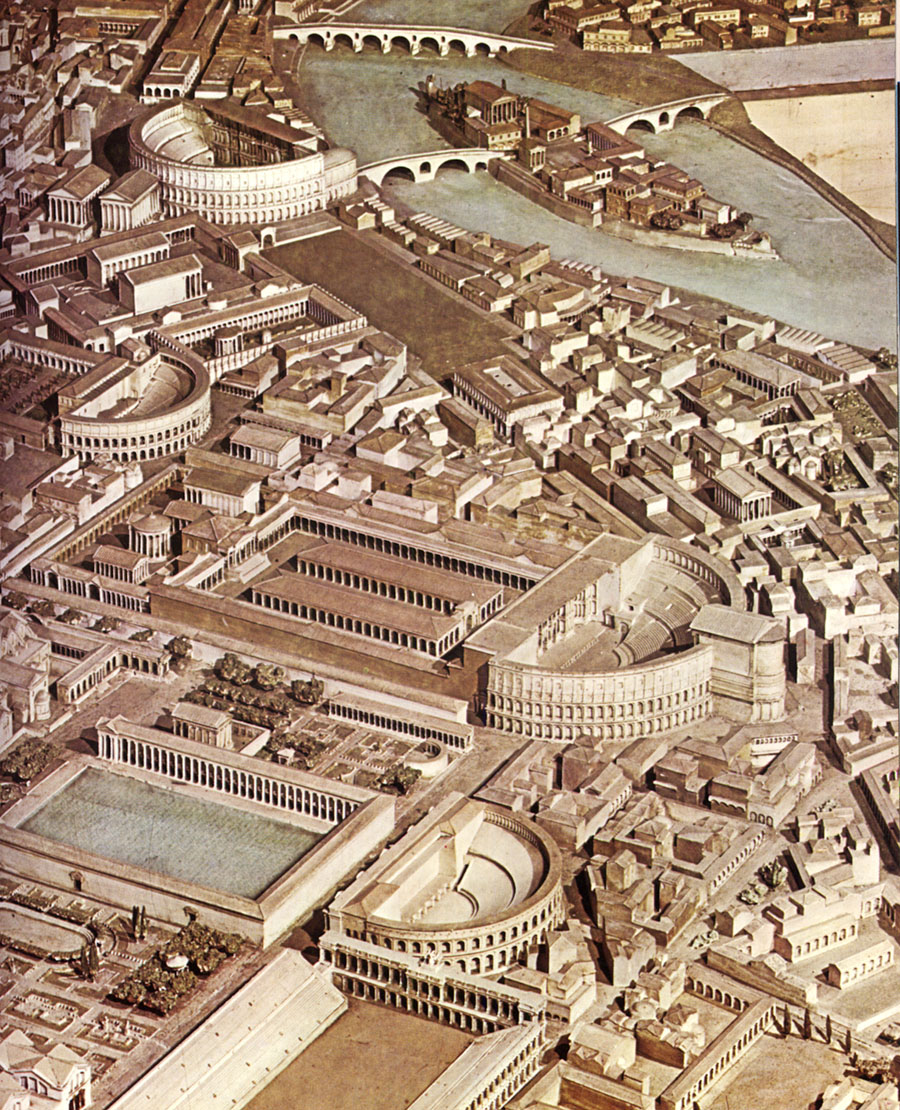
Reconstruction of the Theatre of Pompey and its adjoining complex
A Revolutionary Building
The Theatre of Pompey, built between 61 and 55 BC, was the first permanent stone theatre in Rome. Before then, theatrical performances took place in temporary wooden structures, which were dismantled after each show.
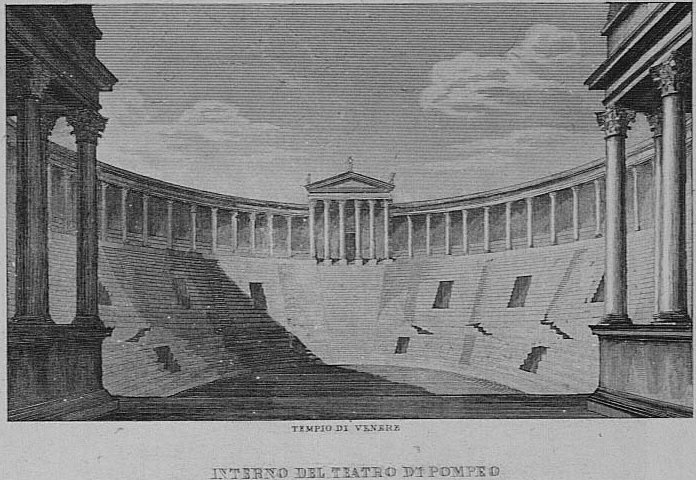
Gnaeus Pompey the Great, the Roman general and statesman, sidestepped the ban on permanent theatres inside the city by presenting the building as a temple dedicated to Venus Victrix, with a flight of steps that "happened" to double as the cavea of a theatre.
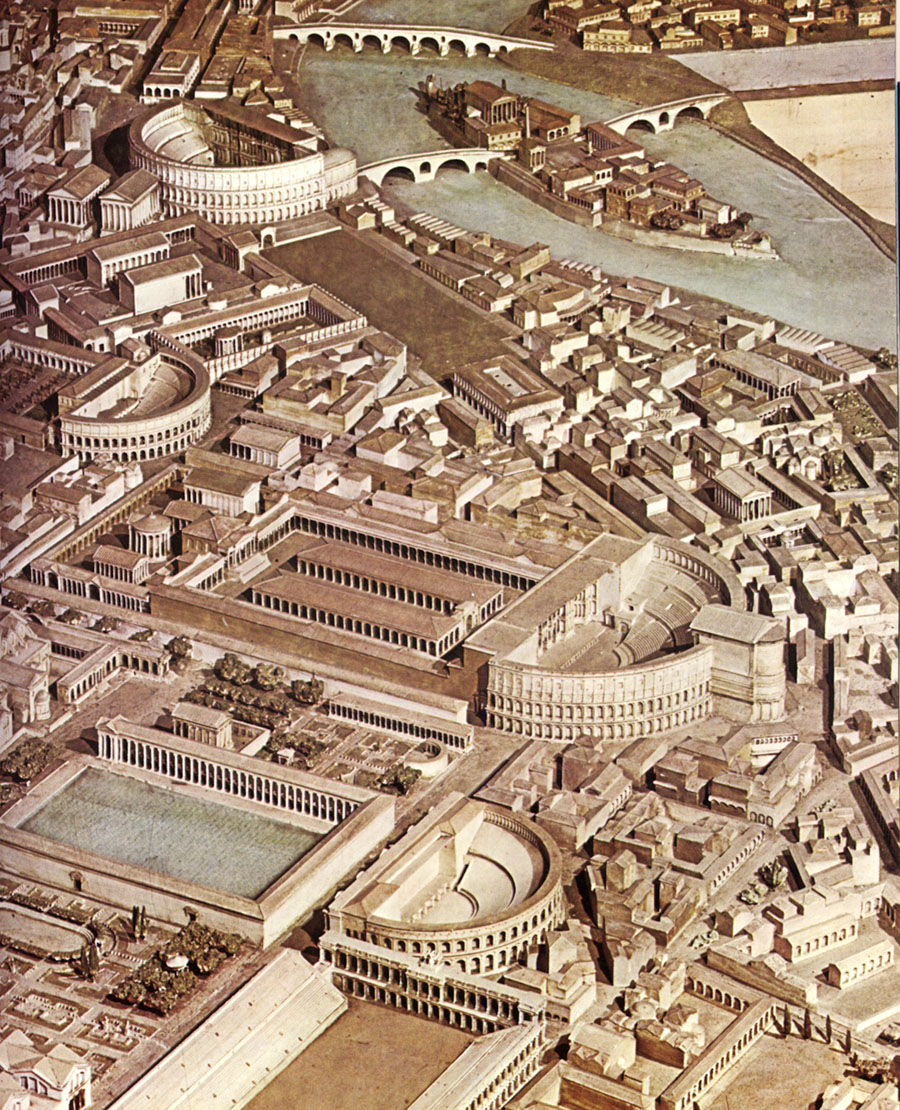
The theatre could seat up to 20,000 spectators and formed part of a larger complex that included a quadriporticus (Porticus Pompeianae) and the Curia of Pompey, where the Roman Senate sometimes met.
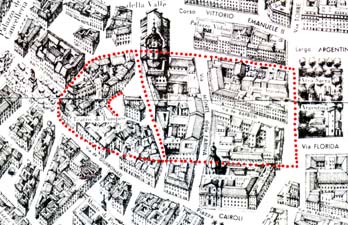
Map showing the location of the Theatre of Pompey in ancient Rome
History and Significance
The Theatre of Pompey, built between 61 and 55 BC, is a landmark in Roman architecture: it was Rome's first permanent theatre . Before this innovation, theatres were temporary wooden structures, taken down after each performance to comply with a law that forbade permanent theatres, regarded as a source of moral corruption and Greek influence.
Pompey the Great, a brilliant strategist in civic life as well, got round this restriction with a clever ploy: he built a temple dedicated to Venus Victrix at the top of the cavea, thereby presenting the entire structure as an extension of the temple. The complex also included a large curia (meeting hall) and a portico with gardens, which became one of the busiest meeting places of Republican Rome.
With a capacity of around 10,000–20,000 spectators, the theatre marked a major architectural and cultural innovation for Rome, ushering in a new era of public entertainment and profoundly shaping the urban development of the area we know today as Largo di Torre Argentina.
The Assassination of Julius Caesar
The Theatre of Pompey is grimly famous as the place where Julius Caesar was assassinated, on 15 March 44 BC – the celebrated Ides of March.
Caesar was stabbed to death in the Curia of Pompey, a building adjoining the theatre where the Senate had gathered that day. The conspirators, led by Marcus Junius Brutus and Gaius Cassius Longinus, chose this symbolically charged location precisely because it had been built by Caesar's rival.
According to the ancient sources, Caesar received 23 stab wounds and fell at the feet of a statue of Pompey – an ironic end to their political rivalry.
"The Death of Caesar" by Vincenzo Camuccini (1798)
Did you know?
The exact spot where Caesar was killed has been identified within the area of present-day Largo di Torre Argentina. During the excavations of the 1920s, the remains of the Curia of Pompey came to light, which today correspond to the area of Temple B in the Sacred Area.
Map showing the location of the Theatre of Pompey in ancient Rome
Structure and Location
The Theatre of Pompey stood in the Campus Martius, a short distance from present-day Largo di Torre Argentina. Its semicircular plan is still recognisable in the modern street layout of Rome, particularly in the curving line of Via di Grottapinta and the surrounding streets.
The complex comprised:
- The theatre itself, with a semicircular cavea
- A temple dedicated to Venus Victrix, set at the top of the cavea
- A vast quadriporticus with gardens (Porticus Pompeianae)
- The Curia of Pompey, where the Senate occasionally met
Today, remains of the theatre can be seen in the basements of some modern buildings, notably beneath the "Da Pancrazio" restaurant in Campo de' Fiori.
Photo Gallery
Timeline of the Theatre
Construction
Pompey the Great has Rome's first permanent theatre built, sidestepping the ban with the addition of a temple.
Ides of March
Julius Caesar is assassinated in the Curia of Pompey, adjacent to the theatre, by a group of senators led by Brutus and Cassius.
Augustan Restoration
Augustus funds the restoration of the theatre after a fire, rededicating it to his nephew Marcellus.
Tiberius Intervenes
The emperor Tiberius completes a further restoration of the damaged structure.
The Great Fire
The theatre is severely damaged during the fire that hits Rome under the reign of Titus.
Secular Games
Philip the Arab restores the theatre for the Secular Games marking Rome's millennium.
Decline
With the fall of the Roman Empire, the theatre is gradually abandoned and its materials reused for new buildings.
Transformation
The theatre's structures are absorbed into medieval buildings, forming the distinctive curve that is still visible in the area's urban fabric.
How to Visit the Remains
Although most of the Theatre of Pompey is today covered by modern buildings, some remains can still be visited:
- "Da Pancrazio" Restaurant (Campo de' Fiori): remains of the theatre's arcades can be seen in the basement
- Via di Grottapinta: the street follows the exact curve of the theatre's cavea
- Sacred Area of Largo Argentina: here lie the remains of the Curia of Pompey, where Caesar was killed